
+theJournal
pencil before mouse.
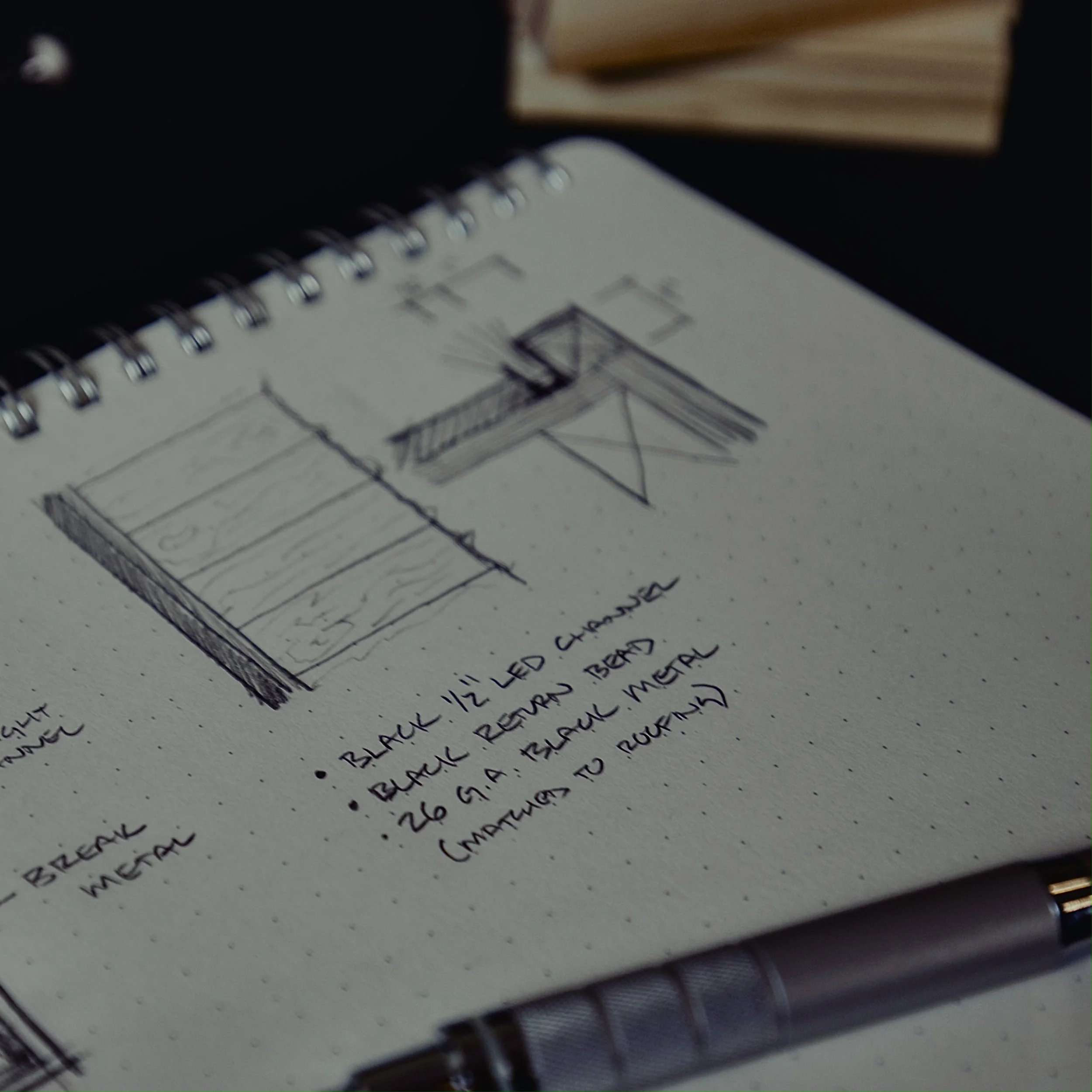
I've made a change. It's been about a month now and I'm not going back.
The new rule at rye+oak is simple: pencil before mouse. Sketch it before you model it. Draw the line before you place the component. Know what you're building before the software decides for you.
This started with the software. The shift to AutoCAD LT started with Eric Reinholdt's Architect Entrepreneur course at 30x40 Design Workshop. I took that course years ago. He uses AutoCAD LT, makes no secret of how much he can't stand Revit, and I always wondered why he never came around to it. I thought I knew better. It took me four years to figure out he was right.
I went from full Revit to Revit LT, and now I've landed at AutoCAD LT and SketchUp. That sounds like a step backward. I'd argue it's the opposite.
the problem with revit wasn't the software.
it was how fast things came together.
Walls connected automatically. Ceiling assemblies snapped into place. Components were pre-built. And because I never had to draw the line, I never had to think about how that connection was actually going to work. I bypassed the decision. I skipped the thought. The model looked complete long before I understood it.
Details that should have been deliberate became accidents. Wall-to-ceiling connections. Reveals. The things that matter most when you're building something that has to live in the real world and hold up to a contractor reading it in the field.
Drawing line by line forces a different kind of thinking. When you have to place every line yourself, you have to know what you're saying. AutoCAD LT gives me that. SketchUp lets me explore mass and form without the model making assumptions for me. The process is slower. That's the point.
slow is accurate.
accurate is fast.
The pen-and-paper piece runs parallel. I grew up drawing. Somewhere along the way I stopped. Russ Tyson of Whitten Architects said it best: you're only as good an artist as the day you stopped. That one stuck.
So I started again. Thirty minutes every morning. Construction details, mostly. Line weight hierarchy. Annotated orthographic drawings. Nothing finished, nothing precious. Just the act of making something by hand every single day.
It's been a month. The difference is real. Details I used to fight through in software, I now work out on paper first. By the time I open a file, I already know what I'm drawing. The frustration is mostly gone. The confidence is up.
I'm not romanticizing analog tools for their own sake. This isn't about being old school. It's about staying in control of my own decisions. The software should execute what I already understand, not generate understanding for me.
Pencil before mouse. That's where the thinking happens.
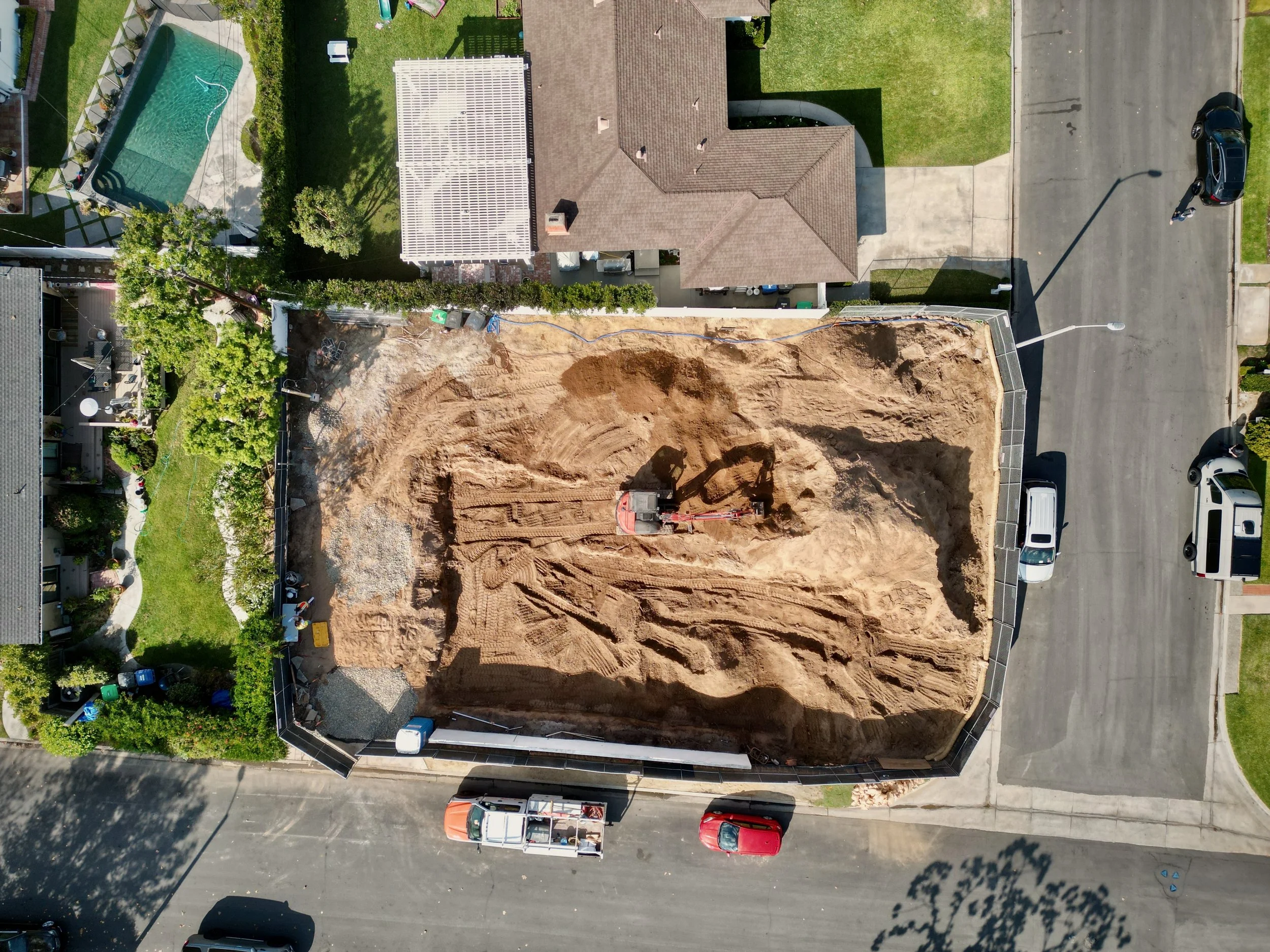
The foundation.
Breaking ground is the first visible moment of a project, but it is not the beginning. The foundation is where planning stops being abstract and decisions become permanent.
theDover
+Shaping the site
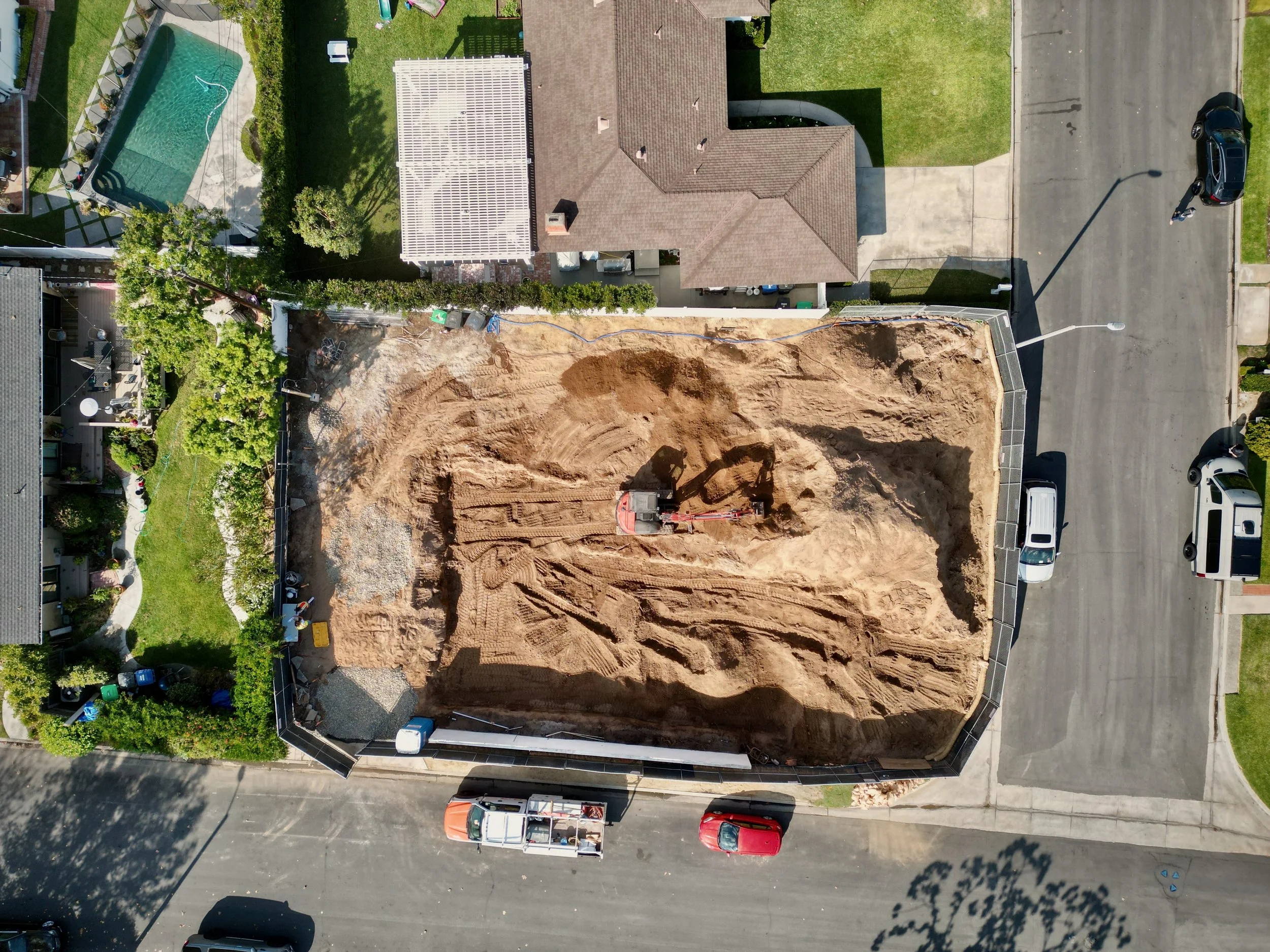
Breaking ground is the first visible moment of any project, but it is not the beginning. By the time excavation starts on a site, most of the important decisions have already been made.
The foundation is where planning stops being abstract. Grades, setbacks, structure, drainage, and floor elevations all collide at once. If those items were not resolved early, this is where problems show up.
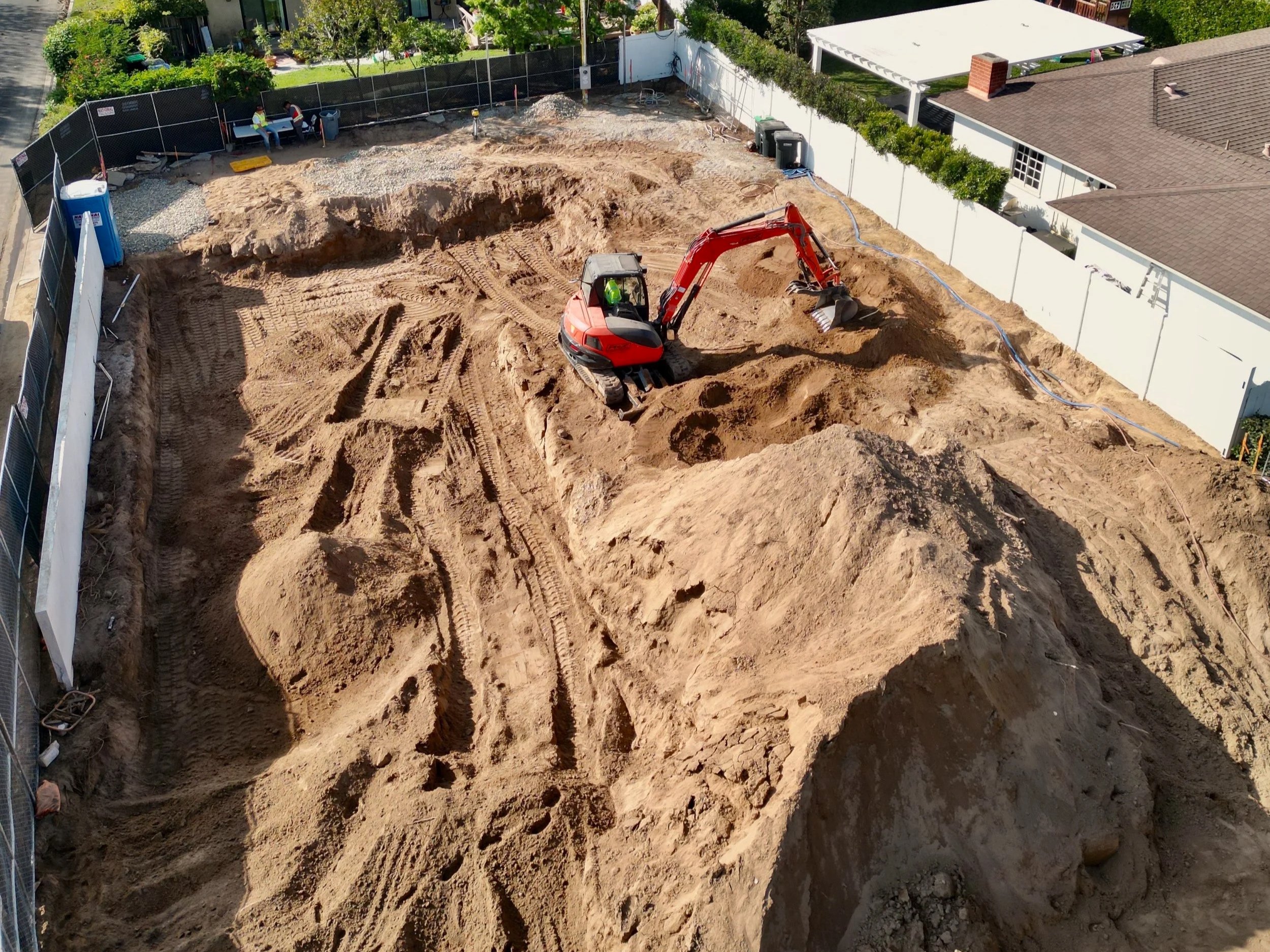
On theDover, excavation marks the transition from drawings to reality. The layout is no longer a plan on paper. It is measured against property lines, neighboring homes, and the street itself. There is no room for interpretation at this stage.
Foundations are not glamorous, but they are unforgiving. A small mistake here carries through framing, waterproofing, and finishes. Getting this part right depends on clear coordination between design, engineering, and construction long before any dirt is moved.
This is also where the value of restraint shows up. Simple massing, clear structural logic, and straightforward load paths make excavation and foundation work easier to execute. Complexity at this stage rarely adds value. It usually adds risk.
+Where structure begins
As the site is graded, you can start to read the project. You see where the house sits. You understand how it relates to the street and the surrounding homes. These relationships are set now. Everything above the foundation is built on these decisions, literally and figuratively.
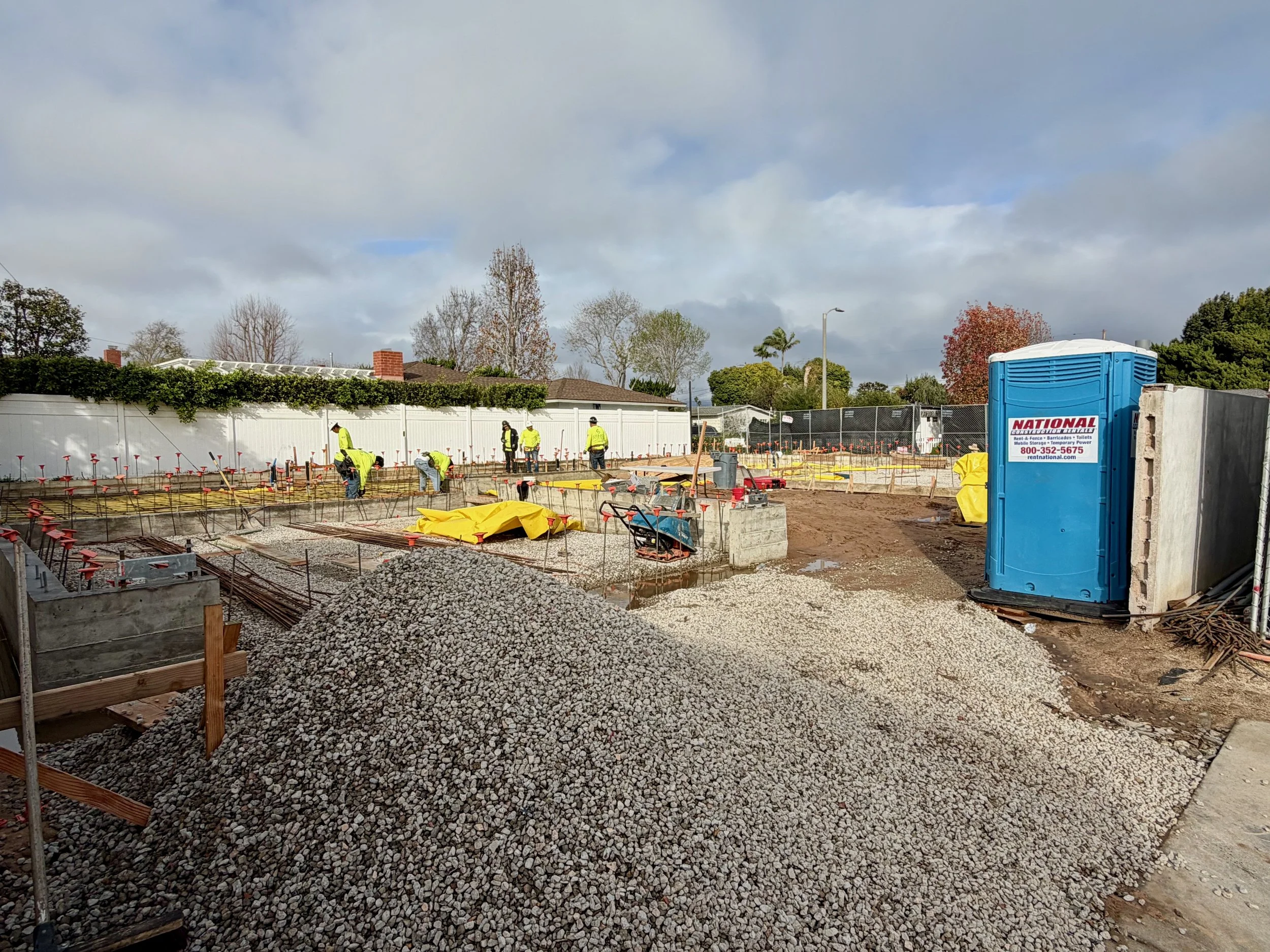
The Dover foundation is not about speed or spectacle. It is about accuracy. Clean lines, correct elevations, and a clear starting point for the structure that follows.
Once the foundation is in, the project moves quickly. Framing gives scale and volume. Spaces begin to feel real. But none of that works without a solid base.
This is where the work starts. I’ll be documenting the build as it progresses on Instagram →
Before it’s built.
Before anything is built, I walk the property and ask one question: can this be preserved or adapted? Here’s how I approach that decision.
Most homes in Orange County don’t begin with raw land. They begin with history. A structure that’s already there. A layout shaped by someone else’s priorities. A series of past decisions, some thoughtful, some less so.
You don’t rush to demo. You evaluate.
This is where my process begins. Before the plans. Before the renderings. Before anything is built.
When I first walk a property, I’m looking for clues. How the sun moves across the space. Where the landscape wants to connect with the house. What the structure might be holding that’s worth keeping. But more than anything, I’m paying attention to the feeling. The rhythm. The way the house breathes, or doesn’t. It’s not about jumping to solutions. It’s about understanding what’s already there.
+Start with what’s there
Every project begins with a question: can this be preserved or adapted?
That one question shapes everything that follows.
I walk the site with an eye for orientation, structure, natural light, flow, and how the house meets the land. I listen for the story it’s telling. Some homes have good bones. Some are surprisingly adaptable. Others might only need a shift in how spaces connect to unlock something better.
I don’t approach design with a heavy hand. I default to restraint. Not every house should be saved, but many deserve the chance. It’s easy to start with subtraction. It takes more care to work with what exists and bring something better out of it.
+When it’s time to rebuild
Some homes are too far gone. A maze of past remodels. A layout that fights you. A house turned away from light and landscape. In those cases, starting fresh is the right move.
But that decision is never quick. Rebuilding is not about indulgence. It’s about being intentional. Tearing something down comes only after careful consideration.
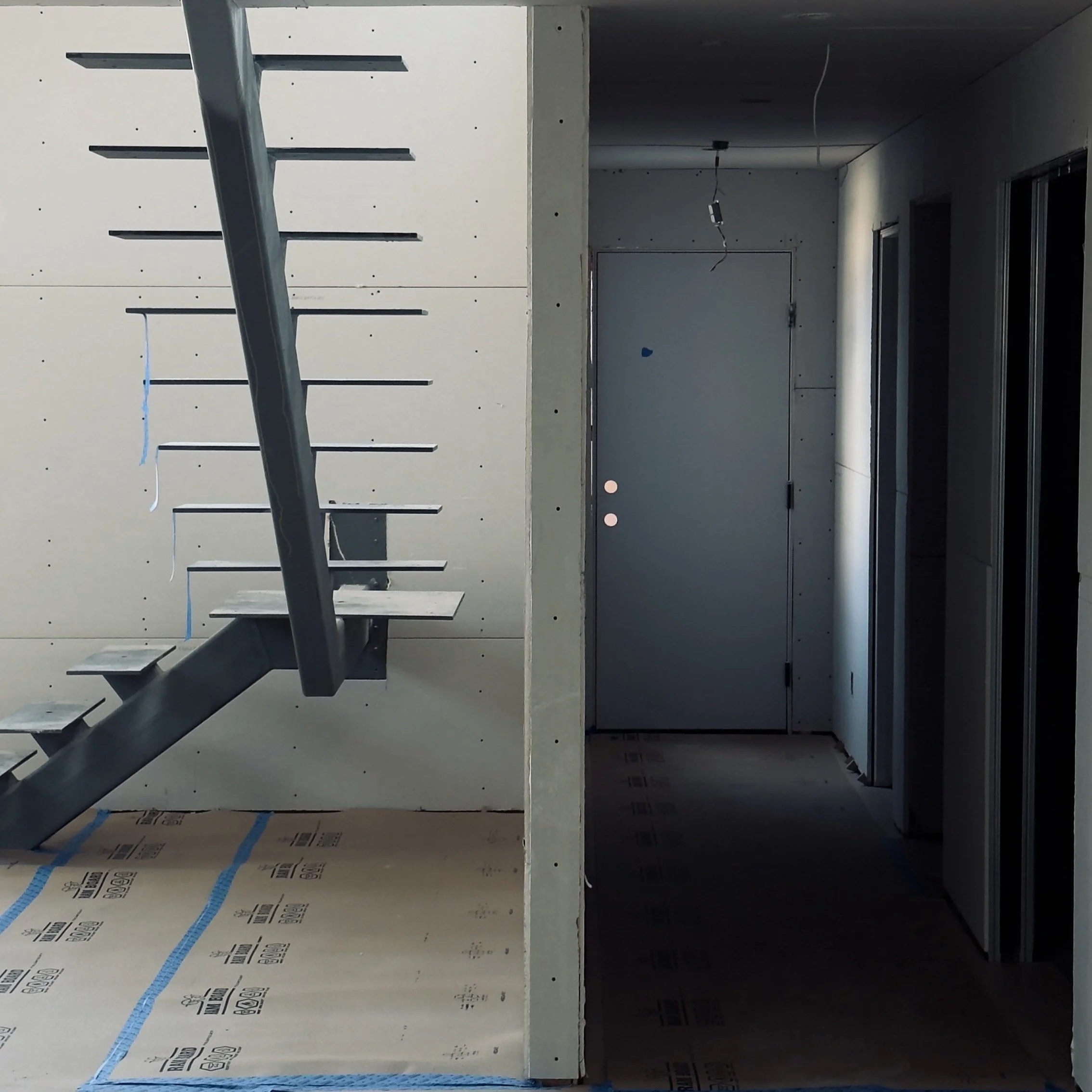
Every detail is resolved before construction. This moment shows the structure catching up to the vision.
+Helping you see it
Most clients don’t read plans, and they shouldn’t have to.
My job is to help them feel the space before it exists.
I use renderings, walkthroughs, and light studies to make that happen. These tools show more than layout. They show how the space lives. How it opens and moves. Where the light lands. When clients can see it, they get clarity. That clarity makes better decisions easier and helps the project move forward with less stress.
There’s always a moment when it clicks. When a client sees their future home for the first time. That moment never gets old.
+What to do next
You don’t need a clear vision to start. You just need to be curious about what’s possible.
Whether the home stays or goes, the process will bring clarity to that decision.
If you’re unsure where to begin, I’d be happy to walk the property with you.
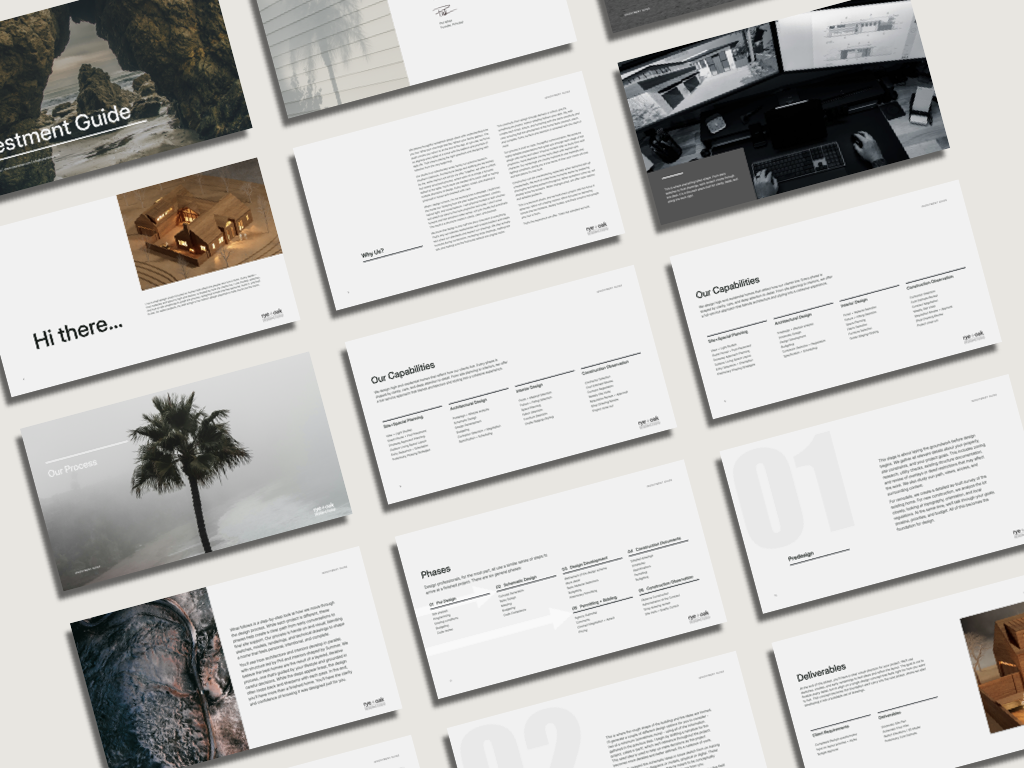
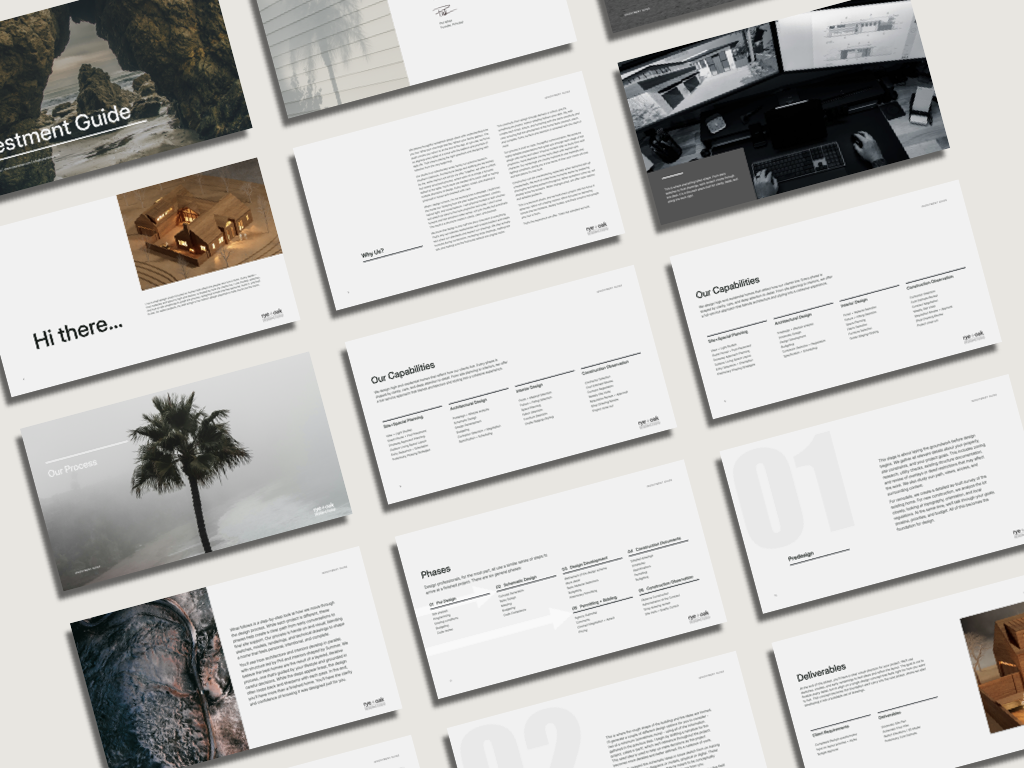
rye+oak investment guide
This early phase is one of my favorites. It’s when the potential begins to take shape.